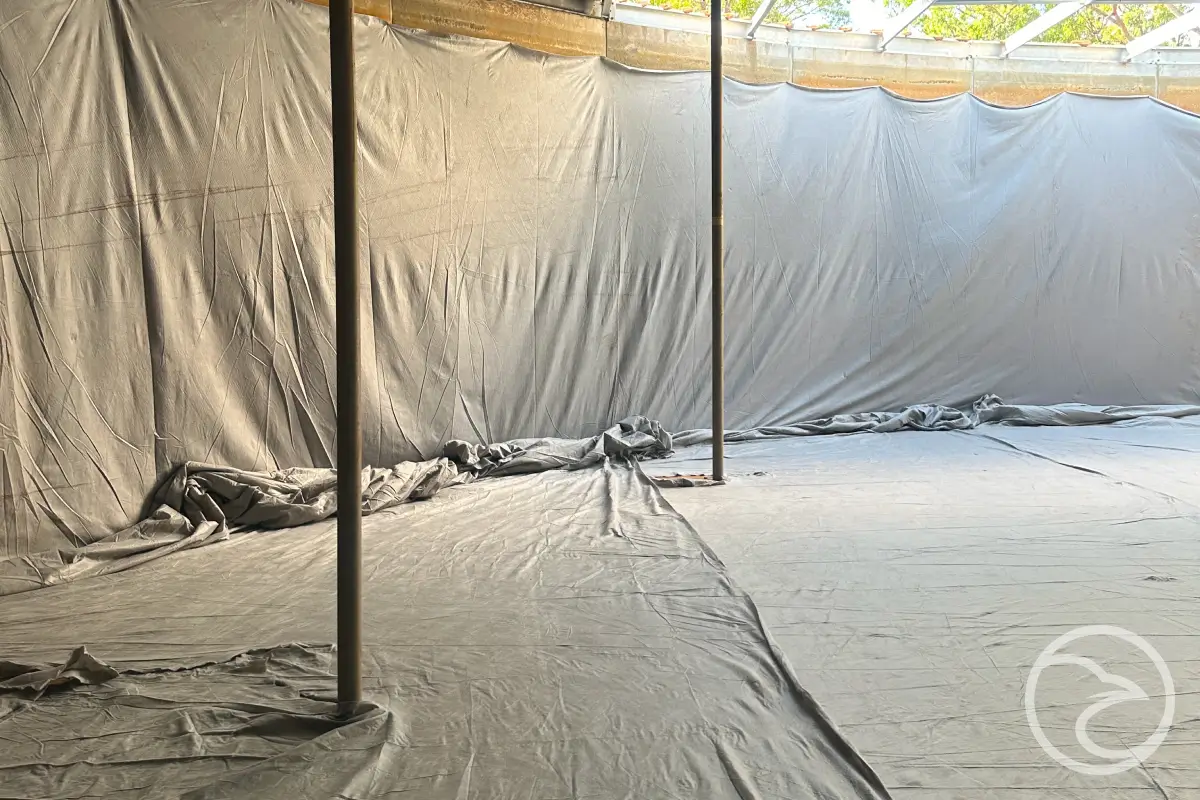
Void liners can provide protective containment within structural cavities associated with water tank installations. Their performance depends on material selection, installation quality, environmental exposure, and the conditions surrounding the protected space.
In some tank installations, voids exist beneath storage structures or around designated containment areas. These spaces may require protection against moisture infiltration, leakage, or other forms of liquid exposure.
Durable void liners for tanks must withstand the conditions expected throughout their service life. However, not every membrane offers the same level of resistance to chemicals, mechanical stress, or environmental damage.
Selecting an unsuitable material can increase the risk of premature deterioration, leakage, and costly repairs.
This guide explains the factors affecting void liner durability, common causes of damage, and practical ways to improve long-term performance.
What are Void Liners for Water Tanks?
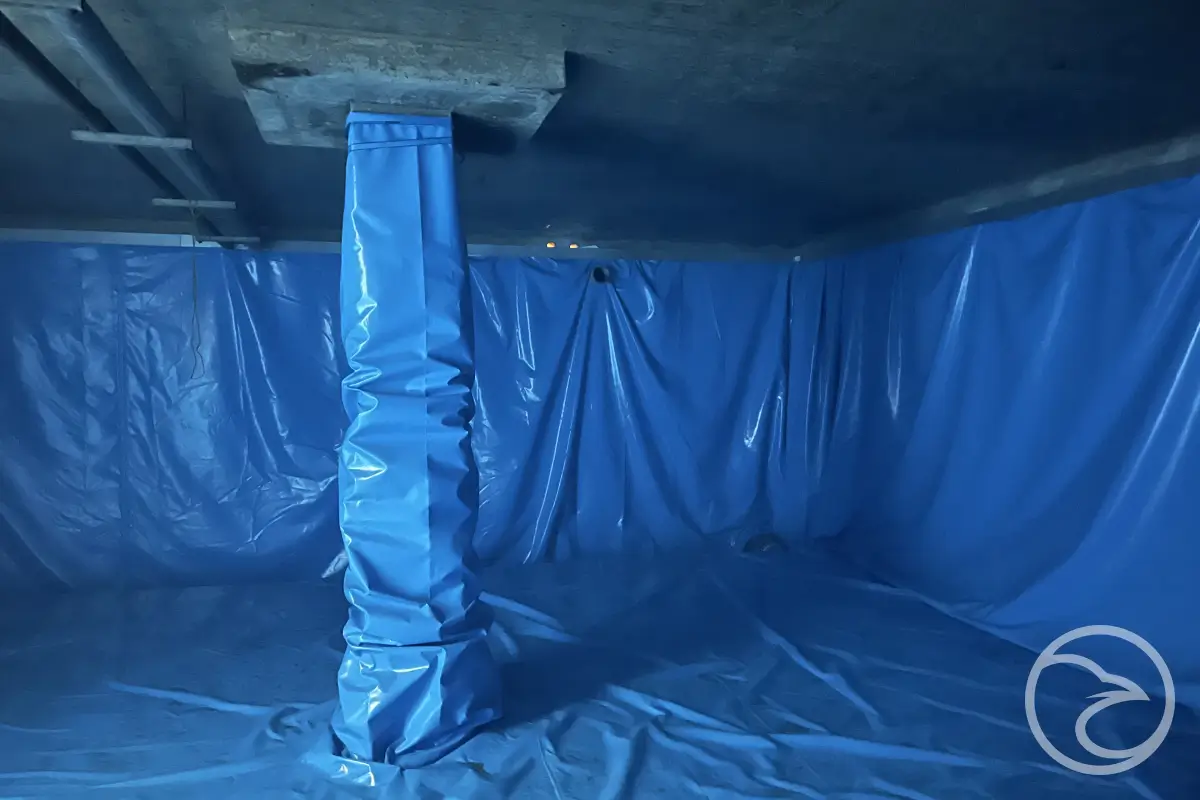
Void liners are protective membranes designed to isolate or contain liquids within designated structural cavities. In water tank applications, these cavities may exist beneath tank structures or within associated containment arrangements.
The liner creates a barrier between the protected space and its surrounding environment. Depending on the installation, this barrier may help control liquid movement or protect structural surfaces from exposure.
However, void liners should not be confused with conventional internal water tank liners. Internal tank liners are designed to contain water within the main storage compartment.
Void liners generally serve a different purpose by protecting or isolating separate structural spaces.
Where are Tank Void Liners Used?
Potential applications include:
-
Structural cavities beneath water storage tanks.
-
Designated containment spaces around tank installations.
-
Underground pits associated with water storage infrastructure.
-
Enclosed service areas requiring liquid containment.
-
Structural voids exposed to moisture infiltration.
-
Custom containment arrangements within industrial facilities.
The suitability of a void liner depends on the actual design and purpose of the cavity. A membrane intended for moisture protection may not provide sufficient performance for continuous liquid containment.
Therefore, the required function must be established before selecting the liner.
Choosing suitable void liners can help protect structural cavities and support long-term containment performance.
Why is Durability Important for Tank Void Liners?
Void liners may be installed in locations where access becomes difficult after construction. This makes durability particularly important. A damaged membrane can allow liquid to move beyond the intended containment area.
Depending on the installation, this may affect surrounding structures or create additional maintenance requirements. In some cases, locating the source of a leak can be difficult.
The liner may be concealed beneath equipment or within an enclosed structural cavity. Replacing it could require temporary access arrangements or removal of surrounding components.
What does a Durable Void Liner need to Withstand?
A suitable liner should be selected for the conditions expected during operation.
These may include:
-
Continuous or intermittent moisture exposure.
-
Contact with compatible liquids.
-
Mechanical pressure from surrounding components.
-
Abrasion against supporting surfaces.
-
Temperature changes.
-
Structural movement.
-
Chemical exposure from the surrounding environment.
-
Handling and installation stresses.
Not every liner experiences all these conditions. For example, a membrane inside a protected underground cavity may have limited ultraviolet exposure.
A liner installed near exposed equipment may experience different environmental stresses. Durability therefore depends on matching the material to the application.
1. Liner Material and Chemical Resistance
Material selection is one of the most important factors affecting void liner durability. Different membrane materials offer different combinations of flexibility, chemical resistance, and mechanical strength.
A liner suitable for one environment may deteriorate prematurely in another.
HDPE Void Liners
High-density polyethylene, commonly called HDPE, is used in various industrial containment applications. HDPE offers resistance to many chemicals and can provide durable containment when correctly specified.
However, its relative stiffness may complicate installation around irregular shapes. Fabrication and installation methods must accommodate the material’s characteristics.
LLDPE Void Liners
Linear low-density polyethylene, or LLDPE, is another material used in flexible lining applications. Certain LLDPE products offer greater flexibility than comparable HDPE membranes.
This can be useful where the liner must accommodate complicated geometry. However, mechanical and chemical performance depends on the specific formulation.
PVC Void Liners
Polyvinyl chloride membranes are used in various waterproofing and containment systems. Some PVC products offer flexibility suitable for fabricated liner configurations.
However, chemical compatibility and temperature limitations must be considered. Exposure to incompatible substances may affect membrane performance.
Reinforced Membranes
Some void liners use reinforced membrane constructions. Reinforcement can improve selected mechanical properties, depending on the product.
However, additional strength does not automatically mean better performance in every application. The membrane must still provide suitable flexibility, chemical compatibility, and seam integrity.
Comparison of Common Liner Materials
|
Material |
Potential advantage |
Important consideration |
|---|---|---|
|
HDPE |
Resistance to many chemicals |
Relative stiffness |
|
LLDPE |
Flexibility for certain geometries |
Product-specific mechanical properties |
|
PVC |
Flexible fabrication options |
Chemical and temperature compatibility |
|
Reinforced membranes |
Enhanced selected mechanical properties |
Joining methods and flexibility |
The appropriate material should be chosen using technical data and the intended operating conditions. No single membrane material is universally suitable for every tank void.
2. Mechanical Strength and Puncture Resistance
Void liners can experience mechanical stresses during installation and operation. Sharp surfaces, construction debris, or unsuitable supporting materials may damage the membrane.
Even a small puncture can compromise containment performance.
Common Sources of Mechanical Damage
Mechanical damage may result from:
-
Sharp edges on surrounding structures.
-
Rough concrete surfaces.
-
Construction debris beneath the liner.
-
Contact with unsupported fittings.
-
Equipment movement.
-
Incorrect handling during installation.
-
Excessive stretching around corners.
-
Unexpected loading from surrounding components.
The likelihood of damage depends on membrane properties and installation conditions.
How to Improve Puncture Resistance
Suitable surface preparation helps reduce puncture risks. Before installation, supporting surfaces should be inspected for sharp objects and unsuitable irregularities. Protective underlays may be appropriate for certain applications.
However, these layers must be compatible with the overall containment design. Membrane thickness should also be considered.
A thicker liner may offer advantages in some conditions, but thickness alone does not determine durability. Material formulation, flexibility, and mechanical properties also influence performance.
3. Seam Quality and Fabrication Methods
A durable membrane can still fail when its seams are poorly fabricated. Seams connect individual liner sections and help maintain a continuous containment barrier.
Their performance depends on the membrane material and approved joining method.
Why are Seams Important?
Seams can experience stress from movement, installation loads, and environmental conditions. Incorrect joining may create weak points or leakage paths.
For this reason, seam quality is essential to long-term liner performance.
Common Fabrication Considerations
Depending on the material, fabrication may involve thermal welding or other approved joining techniques.
Important factors include:
-
Suitable joining equipment.
-
Correct operating parameters.
-
Clean membrane surfaces.
-
Appropriate seam geometry.
-
Compatible materials.
-
Trained installation personnel.
-
Suitable inspection and testing procedures.
The joining method should follow the membrane manufacturer’s requirements.
Factory Fabrication vs On-Site Joining
Some custom void liners can be partially fabricated before delivery. Factory fabrication may reduce the number of seams requiring completion on site.
This can be useful when installation access is restricted. However, factory fabrication does not eliminate all installation risks.
Transport, positioning, and final connections must still be carefully managed.
4. Water Exposure and Environmental Conditions
Environmental exposure can significantly influence liner durability. Water tank voids may experience moisture, groundwater infiltration, or occasional liquid accumulation.
The type and duration of exposure should be considered during material selection.
Continuous Moisture Exposure
Some liners remain in contact with moisture for extended periods. The selected material must tolerate the expected exposure.
However, membrane performance also depends on seams and connection details.
Groundwater Conditions
Underground tank installations may experience groundwater movement. External water pressure can create additional design challenges.
A liner should not be assumed to resist hydrostatic pressure without suitable support and engineering design. Drainage and other protective systems may be required.
Temperature Changes
Temperature influences the physical properties of many polymer membranes. Repeated temperature changes may affect flexibility and dimensional behaviour.
The liner must remain suitable throughout the expected operating temperature range.
Ultraviolet Exposure
Certain membrane materials can deteriorate under prolonged ultraviolet exposure. This is particularly relevant when sections remain exposed to sunlight.
UV resistance depends on the membrane formulation. Where necessary, protective covering or UV-stabilised materials may be required.
5. Structural Movement and Supporting Conditions
Structural movement can place additional stress on void liners. Water tank installations may experience movement associated with foundations, loading, or temperature changes.
The liner must accommodate expected movement without losing containment integrity.
Foundation Settlement
Uneven foundation settlement can affect surrounding structures. Where a liner crosses moving joints or unsupported areas, stress may develop.
The containment design should consider expected structural behaviour.
Movement Around Penetrations
Pipes, fittings, and structural connections may pass through a lined cavity. These penetrations can become vulnerable points.
Suitable detailing is required to accommodate movement while maintaining containment.
Unsupported Membrane Sections
Some installations contain gaps or uneven supporting surfaces. Unsupported membrane areas may experience additional stress under loading.
Appropriate support and protective detailing can reduce this risk.
6. Installation Quality
Even a correctly specified liner can fail prematurely when installation is inadequate. Installation quality affects membrane integrity, seam performance, and long-term reliability.
Site Preparation
The installation area should be assessed before liner placement. Sharp objects, debris, and unsuitable surface conditions should be addressed.
The required preparation depends on the liner system.
Accurate Measurements
Custom-fabricated void liners require accurate dimensions. Incorrect measurements may create excessive folds, stretching, or poorly positioned connections.
Detailed site assessment helps reduce these problems.
Correct Liner Positioning
The liner should be positioned according to the approved installation design. Unnecessary tension and unsupported areas should be avoided.
The membrane should accommodate the intended geometry without compromising its integrity.
Final Inspection and Testing
The completed installation should undergo appropriate quality checks. These may include visual inspection, seam testing, or other suitable integrity assessments.
Testing requirements depend on the material and containment system. Any identified defects should be corrected before the liner enters service.
For a better understanding of pricing factors, explore our tank liner cost guide before planning your project.
Common Causes of Void Liner Damage
Several problems can affect tank void liners during their service life. Some result from material deterioration.
Others develop through mechanical damage or unsuitable installation conditions.
|
Problem |
Possible cause |
Prevention |
|---|---|---|
|
Punctures |
Sharp surfaces or debris |
Surface preparation and protective layers |
|
Seam leakage |
Poor fabrication or installation |
Approved joining and testing |
|
Chemical damage |
Incompatible liquid exposure |
Material compatibility assessment |
|
Excessive stretching |
Incorrect dimensions or movement |
Accurate fabrication and design |
|
Abrasion |
Contact with rough surfaces |
Suitable protection |
|
Premature ageing |
Unsuitable environmental exposure |
Correct material selection |
|
Damage around penetrations |
Poor detailing or movement |
Engineered connection details |
The severity of these problems depends on the liner’s purpose and operating conditions. For critical containment systems, even localised damage may require prompt investigation.
How to Improve the Lifespan of Void Liners for Tanks
Improving liner durability begins before installation. Material selection, design, and quality control all influence long-term performance.
Select Materials for Actual Operating Conditions
The selected membrane should be compatible with expected liquids and environmental conditions. Avoid choosing materials based only on general durability claims.
Technical performance data should guide the decision.
Use Custom Fabrication where Appropriate
Custom fabrication can help accommodate irregular structural voids. Accurate fabrication may reduce unnecessary folds and complicated site connections.
However, suitable design and installation remain essential.
Protect the Liner Against Mechanical Damage
Supporting surfaces should be prepared before installation. Protective layers may be necessary where puncture or abrasion risks exist.
The required protection depends on the application.
Ensure Suitable Seam Quality
Seams should be completed using approved methods. Appropriate quality checks help identify potential defects.
The inspection process should reflect the membrane material and containment requirements.
Plan for Inspection and Maintenance
Some tank void liners become difficult to access after installation. Inspection arrangements should therefore be considered during design.
Where practical, access should support condition assessments and repairs.
Address Damage Promptly
Small defects can compromise containment. Identified damage should be assessed before further deterioration occurs.
Repairs must use methods compatible with the original membrane.
When Should a Tank Void Liner be Repaired or Replaced?
Not every damaged void liner requires complete replacement. Some localised defects may be repairable when the surrounding material remains suitable.
However, repair feasibility depends on accessibility and the extent of deterioration.
When Repairs may be Suitable
Repairs may be appropriate for:
-
Localised punctures.
-
Limited seam defects.
-
Small areas of mechanical damage.
-
Accessible connection problems.
-
Isolated defects in otherwise sound material.
Repairs should follow approved procedures for the membrane type.
When Replacement may be Necessary
Replacement may be required when deterioration affects the liner’s overall performance.
Examples include:
-
Extensive chemical degradation.
-
Widespread membrane cracking.
-
Significant material deterioration.
-
Repeated failures across multiple areas.
-
Unsuitable original material selection.
-
Damage that cannot be reliably repaired.
A condition assessment helps determine the appropriate response. The decision should consider both immediate repair feasibility and expected future performance.
For a detailed comparison of repair costs, structural conditions, and long-term performance, explore tank relining vs tank replacement.
How do Durable Void Liners Support Water Tank Infrastructure?
Void liners can provide protective containment within selected structural spaces associated with water tanks. Their role depends on the specific installation. In some applications, the liner helps isolate a cavity from unwanted moisture.
In others, it may form part of a wider liquid containment arrangement. A durable liner can help reduce the likelihood of membrane-related leakage when correctly specified and installed.
However, it cannot compensate for unsuitable structural design or unresolved groundwater problems. Reliable performance requires coordination between membrane selection, supporting structures, and installation details.
For specialised containment applications, explore our Void Liners to learn more about custom-fabricated membrane solutions.
To understand their purpose and common applications, read what are void liners and where are they used?
Conclusion
Durable void liners for tanks depend on more than membrane thickness or material strength. Chemical compatibility, mechanical protection, seam quality, and installation conditions all influence long-term performance.
Structural movement and environmental exposure can create additional challenges. Selecting suitable materials and following appropriate installation procedures helps reduce premature deterioration.
Understanding these factors allows project teams to specify reliable void liner systems for demanding water tank environments.