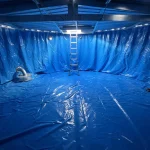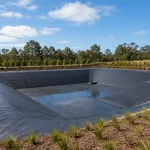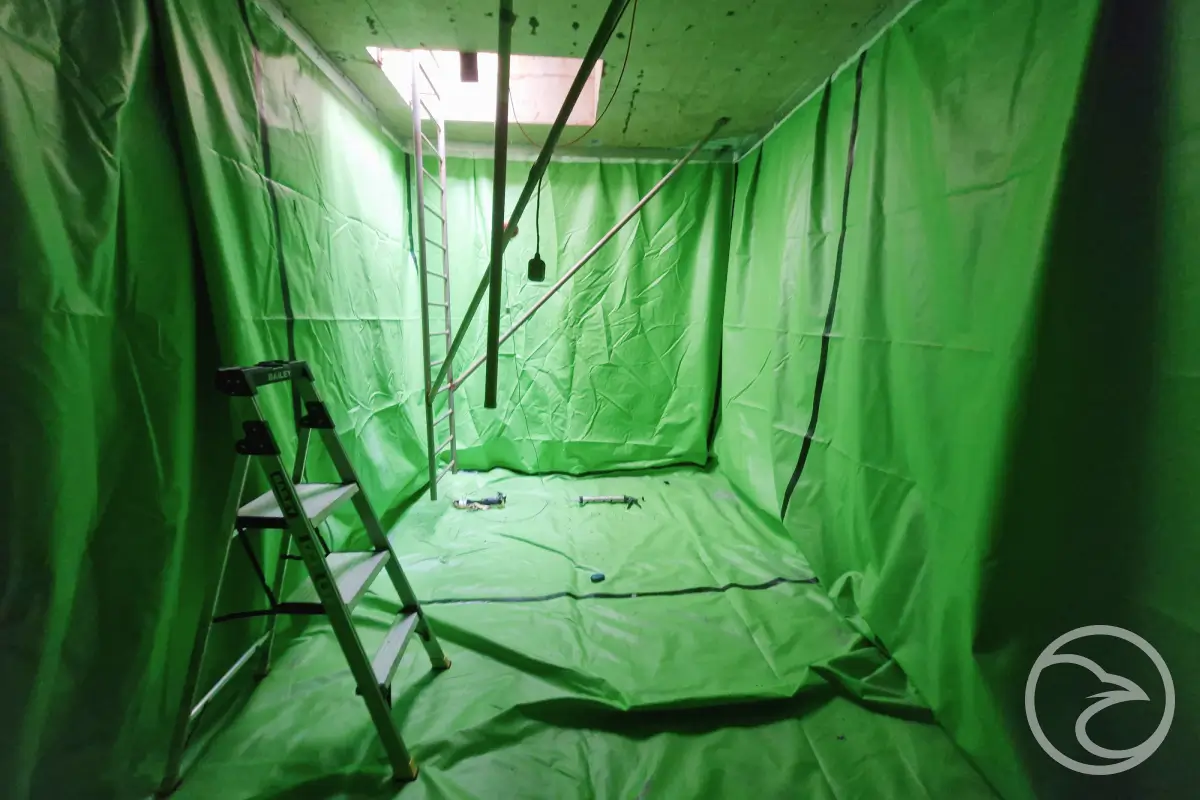
Void liners provide protective containment for structural cavities, underground spaces, and areas where conventional waterproofing methods may be difficult to apply. These specialised membranes help control liquid movement and protect surrounding structures from unwanted moisture or chemical exposure.
In industrial and commercial environments, voids can exist beneath tanks, within concrete structures, or inside underground service chambers. Without suitable protection, these spaces may become vulnerable to water infiltration, contamination, or leakage.
Custom void liners can be fabricated to accommodate unusual dimensions, complex surfaces, and restricted installation conditions. However, their performance depends on the liner material, installation method, and intended containment requirements.
This guide explains what void liners are, how they work, where they are used, and what influences their long-term performance.
What is a Void Liner?
A void liner is a protective membrane designed to line or isolate a cavity, enclosed space, or structural void. The term void refers to an empty or partially enclosed space within a structure or installation. These spaces may be intentionally designed or created by the arrangement of surrounding structural components.
Void liners can help provide a barrier against water, liquids, or other substances, depending on their material and design. They are commonly considered where conventional waterproofing systems cannot provide suitable coverage or containment.
Unlike standard flat membranes, void liners may require customised shapes and connection details. This allows the liner to follow irregular surfaces and accommodate structural features.
Custom-fabricated void liners can accommodate complex structural shapes and specific containment requirements.
What is the Main Purpose of a Void Liner?
The primary purpose of a void liner is to create a protective barrier within a designated space.
Depending on the application, this barrier may help:
-
Prevent liquid migration into surrounding structures.
-
Reduce unwanted water infiltration.
-
Protect surfaces from moisture exposure.
-
Support secondary containment requirements.
-
Separate stored liquids from vulnerable construction materials.
-
Provide a replaceable protective layer within certain installations.
However, not every void liner is designed for the same purpose. Some systems focus on waterproofing, while others provide containment for particular liquids.
The intended function should always be established before selecting the liner material.
How do Void Liners Work?
Void liners work by forming a continuous protective barrier between a cavity and its surrounding environment. The liner separates the protected space from materials or liquids that could otherwise pass through exposed surfaces.
Its effectiveness depends on several factors, including membrane integrity, connection details, and installation quality.
Creating a Protective Barrier
The membrane covers the surfaces requiring protection. This may include floors, walls, corners, or other structural features.
A correctly designed system helps prevent liquid movement through the lined area. However, the required barrier properties depend on the application.
A membrane suitable for ordinary water exposure may not be suitable for aggressive industrial chemicals.
Maintaining Continuity Around Joints
A protective liner must maintain suitable continuity across its intended containment area. Joints, seams, and transitions can become vulnerable points if they are incorrectly fabricated.
Depending on the material, seams may be welded, bonded, or joined using another approved method. The selected joining technique must suit the membrane and operating conditions.
Accommodating Structural Features
Structural voids often contain penetrations, corners, supports, or irregular surfaces. These features can make conventional membrane installation difficult.
Custom-fabricated void liners can incorporate shapes and connection details suited to the installation. However, excessive stretching, unsupported sections, or unsuitable detailing may affect performance.
Supporting Containment Performance
Some void liners form part of a wider containment system. For example, a liner may help isolate a structural cavity from potential liquid exposure.
In other installations, it may support secondary containment around equipment or storage structures. The liner must be designed for the expected liquid, loading, and environmental conditions.
Where are Void Liners Commonly Used?
Void liners can be used across different commercial, industrial, and infrastructure environments. Their suitability depends on the purpose of the void and the type of protection required.
The following table outlines potential applications.
|
Application |
Purpose of the void liner |
Key considerations |
|---|---|---|
|
Underground vaults |
Protect enclosed spaces from liquid ingress or exposure |
Access, drainage, and groundwater conditions |
|
Service pits |
Provide a protective barrier around internal surfaces |
Penetrations, corners, and maintenance access |
|
Tank bases |
Isolate designated cavities beneath or around tanks |
Structural loading and liquid compatibility |
|
Industrial containment areas |
Support containment of compatible liquids |
Chemical resistance and seam integrity |
|
Confined spaces |
Provide custom protection in restricted locations |
Safe installation access and complex geometry |
|
Infrastructure cavities |
Protect selected structural voids |
Movement, moisture exposure, and durability |
Each application requires an assessment of the surrounding structure and operating environment.
1. Underground Vaults
Underground vaults are enclosed structures used for utilities, equipment, or other infrastructure. These spaces may be exposed to groundwater, surface water, or moisture entering through structural joints. Where suitable, containment liners for underground vaults can provide an additional protective barrier.
However, the system must account for external water pressure and potential groundwater movement. A liner alone may not resolve every source of water ingress.
Drainage, structural waterproofing, and other protective measures may also be necessary.
Important design considerations include:
-
Groundwater conditions.
-
Expected hydrostatic pressure.
-
Wall and floor geometry.
-
Pipe and cable penetrations.
-
Existing structural damage.
-
Access for installation and inspection.
Custom fabrication may help accommodate irregular vault dimensions. However, membrane selection must reflect the actual waterproofing or containment requirements.
2. Service Pits and Utility Chambers
Service pits provide access to equipment, pipework, cables, or other infrastructure components. Their internal surfaces may contain corners, penetrations, and changes in elevation. These features can complicate protective membrane installation.
Void liners may be considered where a continuous barrier is required within the pit. For example, a fabricated membrane may help isolate a designated area from moisture exposure. However, service pits can experience mechanical loading and regular maintenance activity.
The liner must therefore be protected against foreseeable damage. Suitable access and inspection arrangements are also important.
3. Tank Bases and Structural Voids
Certain tank installations include cavities or designated spaces beneath or around the main storage structure. These spaces may require protection against liquid exposure or migration. A void liner can potentially provide a barrier within an appropriately designed containment arrangement.
However, a void liner should not be confused with the primary internal lining of a water tank. A conventional tank liner is generally intended to contain the liquid stored inside the tank.
A void liner instead protects or isolates a separate structural space. The distinction matters because the two applications may involve different loading and material requirements.
For tank-related voids, designers should consider:
-
The location and geometry of the cavity.
-
Potential exposure to stored liquids.
-
Mechanical loading from surrounding structures.
-
Compatibility with existing construction materials.
-
Access for inspection and maintenance.
-
Requirements for detecting or managing leakage.
The liner should not be expected to replace structural support or an engineered tank foundation.
4. Industrial Containment Areas
Industrial facilities may contain cavities, pits, or enclosed areas exposed to process liquids. Some installations require protective barriers to reduce liquid migration into surrounding structures. Custom void liners may form part of these containment arrangements.
However, chemical compatibility is essential. Industrial liquids can differ significantly in their effects on polymer membranes. A liner suitable for water may deteriorate when exposed to solvents, oils, or other chemicals.
Material selection must therefore reflect the actual substances involved. Where secondary containment is required, the complete system must satisfy the applicable containment design requirements.
5. Confined and Restricted-Access Spaces
Some structural voids are difficult to access because of their dimensions or surrounding equipment. Traditional membrane installation methods may be impractical in these locations. Custom-fabricated liner solutions can potentially reduce the amount of fabrication required on site.
For example, a liner may be manufactured to match measured dimensions before delivery. However, installation feasibility must still be assessed. Restricted access can create significant safety risks, particularly in enclosed spaces.
Confined-space work must follow applicable Australian work health and safety requirements. Not every restricted cavity is legally classified as a confined space, but each requires appropriate risk assessment.
6. Infrastructure and Structural Cavities
Infrastructure assets can contain voids that require protection against moisture or liquid exposure. These may occur within concrete structures, underground installations, or equipment enclosures. A fabricated liner may be suitable when a flexible protective barrier is required.
However, structural movement and surrounding conditions must be considered. Changes in temperature, loading, or foundation conditions can influence membrane performance.
A suitable design should accommodate expected movement without damaging the liner.
What Materials are used for Void Liners?
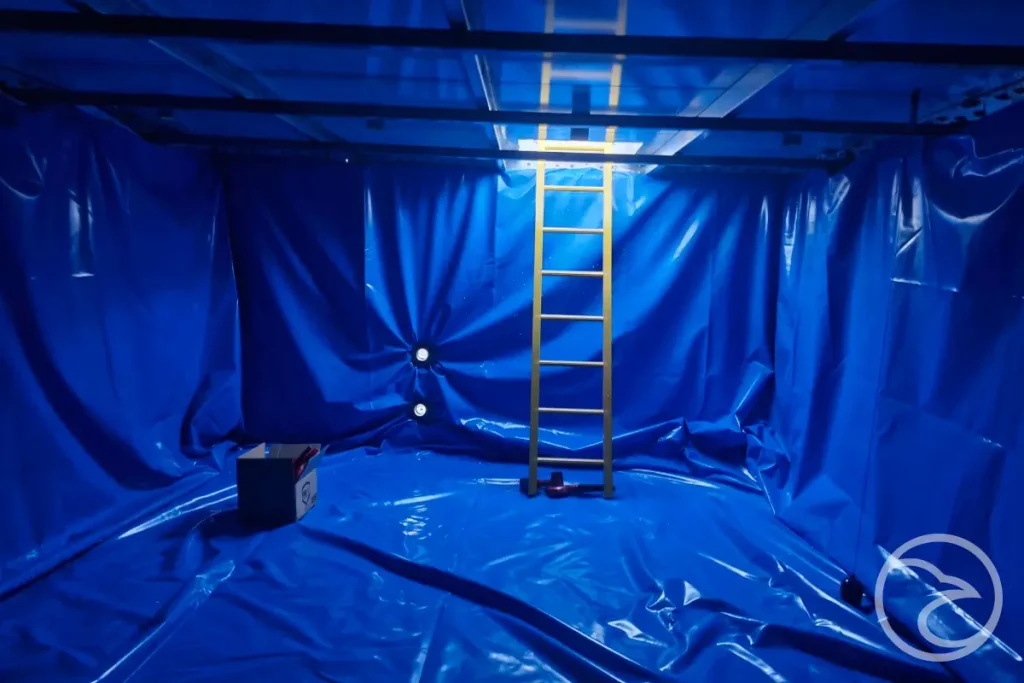
Void liners can be manufactured from different flexible membrane materials. The correct choice depends on the stored or surrounding substances, installation environment, and required performance.
There is no single material suitable for every application.
Polyethylene-Based Membranes
Polyethylene materials are used in various industrial lining and containment applications. High-density polyethylene, commonly called HDPE, offers useful chemical resistance for many applications.
However, HDPE can be relatively stiff compared with some other flexible membranes. This may influence its suitability for complicated shapes or confined installations.
Linear low-density polyethylene, or LLDPE, can offer greater flexibility in certain formulations. Material suitability depends on the specific product and operating conditions.
PVC Membranes
Polyvinyl chloride, commonly called PVC, is another material used in flexible lining applications. Certain PVC membranes can accommodate complex shapes and fabricated configurations.
However, their performance depends on formulation, chemical exposure, and temperature. Some substances may affect plasticisers or other membrane components.
Compatibility should therefore be confirmed before use.
Reinforced Flexible Membranes
Some fabricated liners incorporate reinforcement layers to improve selected mechanical properties. Reinforcement can influence tensile strength, dimensional stability, and handling characteristics.
However, reinforced materials may have different flexibility and joining requirements. Their suitability depends on the complete membrane construction.
How to Select the Right Material
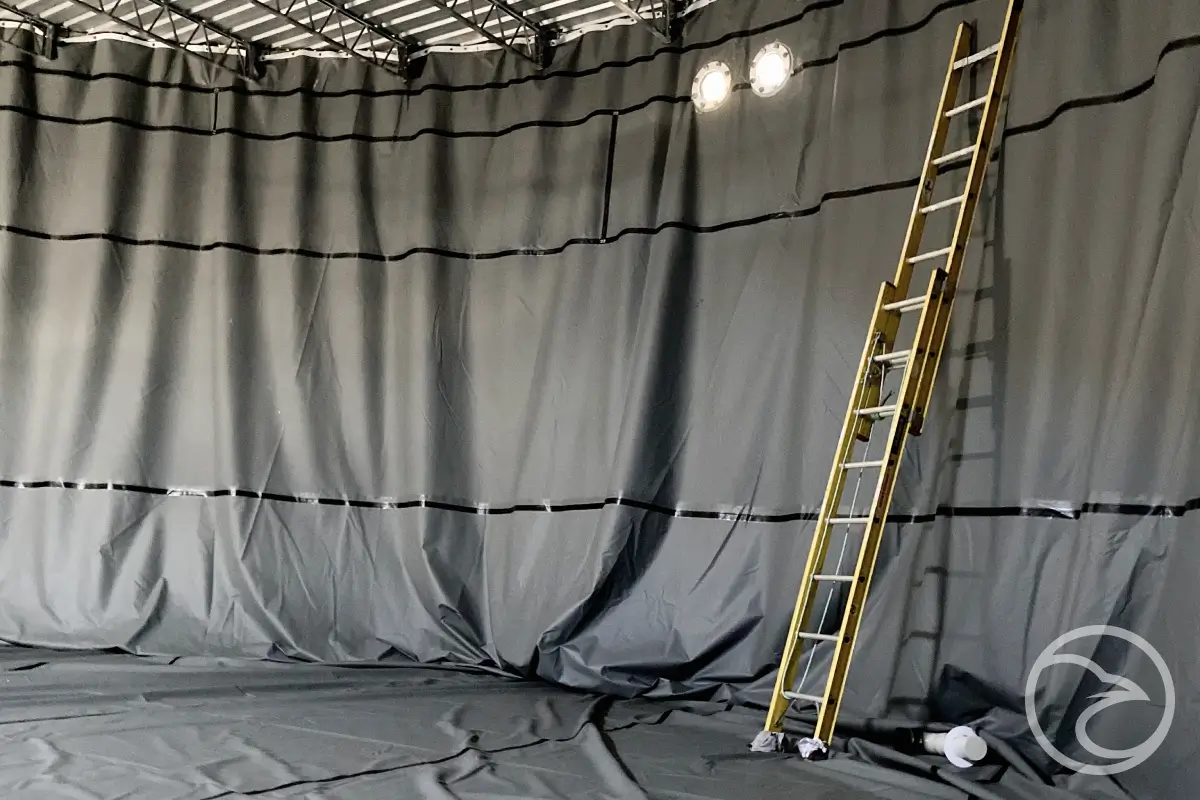
Material selection should consider more than thickness.
Important factors include:
-
Chemical compatibility.
-
Expected liquid exposure.
-
Operating temperature.
-
Mechanical loading.
-
Flexibility requirements.
-
Puncture and abrasion risks.
-
Seam fabrication methods.
-
Expected service conditions.
-
Inspection and repair requirements.
Manufacturers’ technical data should support material selection. Where necessary, testing may be required to confirm suitability for the intended application.
Understanding the costs of different lining solutions is easier with the practical insights in our tank liner cost guide.
What are the Benefits of Custom-Fabricated Void Liners?
Custom void liners are manufactured to accommodate the dimensions and features of a particular installation. This approach can offer practical advantages when standard membrane layouts are unsuitable.
However, successful fabrication requires accurate measurements and suitable design details.
Better Fit for Irregular Spaces
Structural voids rarely have perfectly uniform dimensions. They may contain corners, changes in depth, penetrations, or other obstacles.
Custom fabrication allows the liner geometry to reflect these features. This can help reduce unnecessary folds and poorly positioned joints.
However, accurate site measurements remain essential.
Reduced On-Site Fabrication
Some liner components can be prepared under controlled fabrication conditions. This may reduce the amount of joining required at the installation site.
Factory fabrication can also support consistent production procedures. However, field connections may still be necessary.
Their quality remains important to overall containment performance.
Improved Installation Planning
Custom fabrication requires the installation to be assessed before production. This process helps identify access restrictions and complicated structural details.
Potential problems can therefore be considered earlier. However, unexpected site conditions may still require adjustments.
Material Selection for Specific Conditions
Custom-fabricated systems can incorporate materials selected for the intended exposure. For example, one project may prioritise flexibility.
Another may require particular chemical resistance or mechanical properties. The final material should reflect the complete operating environment.
Adaptability to Different Applications
Custom liner designs can accommodate a range of cavity shapes and dimensions. This makes them relevant to various industrial and infrastructure applications.
However, adaptability does not remove the need for engineering assessment. Every installation must satisfy its own performance requirements.
How are Void Liners Installed?
Void liner installation varies according to the membrane material, cavity geometry, and required containment function. However, most projects follow several general stages.
Step 1: Assess the Installation Area
The installation begins with an assessment of the existing structure. This identifies dimensions, surface conditions, access limitations, and potential hazards.
The assessment should also establish the liner’s intended function. Waterproofing and liquid containment may require different design approaches.
Step 2: Select the Liner Material
The material must suit the expected exposure and installation conditions. Chemical resistance, flexibility, and mechanical properties should be reviewed.
The joining method must also be compatible with the selected membrane.
Step 3: Prepare the Substrate
The supporting surface should be prepared according to the liner system requirements. Sharp objects, loose debris, and unsuitable surface conditions may damage flexible membranes.
Some installations may require a protective underlay or additional surface treatment. The required preparation depends on the substrate and membrane design.
Step 4: Position the Liner
The liner is placed within the designated cavity. Custom-fabricated components should align with the intended geometry.
Excessive stretching, unsupported sections, and unintended folds should be avoided where they could compromise performance.
Step 5: Complete Seams and Connections
Where necessary, membrane sections are joined using approved fabrication methods. Penetrations and transitions require particular attention.
Incorrectly completed connections can become potential leakage paths. The installation method should follow the membrane manufacturer’s specifications.
Step 6: Inspect and Test the Installation
The completed liner should undergo appropriate quality checks. Depending on the system, these may include visual inspections and suitable seam testing.
Some installations may require additional integrity testing. The testing method must be appropriate for the liner material and containment design.
Step 7: Protect the Completed Liner
A completed liner may require protection against mechanical damage. This is particularly important where equipment, foot traffic, or structural components could contact the membrane.
Protective arrangements should reflect expected operating conditions.
What can Cause Void Liner Failure?
Void liners can deteriorate when materials or installation details are unsuitable for operating conditions. Some failures result from direct mechanical damage.
Others develop gradually through chemical exposure or environmental stress.
|
Potential problem |
Possible cause |
Prevention |
|---|---|---|
|
Punctures |
Sharp surfaces or mechanical contact |
Surface preparation and protective layers |
|
Seam leakage |
Incorrect joining or installation damage |
Approved fabrication and testing |
|
Chemical deterioration |
Incompatible liquid exposure |
Material compatibility assessment |
|
Excessive deformation |
Unsuitable loading or movement |
Appropriate design and support |
|
Abrasion |
Repeated contact with rough surfaces |
Protective detailing |
|
Premature ageing |
Unsuitable temperature or environmental exposure |
Correct material selection |
|
Damage around penetrations |
Poor connection detailing |
Suitable penetration design |
The most effective repair approach depends on the defect and membrane material. Some localised damage may be repairable.
However, extensive deterioration or incompatible materials may require replacement.
How Long do Void Liners Last?
Void liner service life depends on material properties, installation quality, and operating conditions. There is no universal lifespan that applies to every membrane or application.
Several factors influence long-term durability.
Material Compatibility
Chemical exposure can affect membrane performance. A liner exposed to incompatible substances may deteriorate prematurely.
Compatibility should be established before installation.
Environmental Conditions
Temperature, moisture, and other environmental factors can influence material ageing. Some membranes also require protection from prolonged ultraviolet exposure.
The expected environment should guide material selection.
Mechanical Protection
Punctures, abrasion, and excessive movement can shorten liner service life. Suitable substrate preparation and protective detailing help reduce these risks.
Installation Quality
Poorly completed seams or connections can compromise an otherwise suitable liner. Correct installation and quality control are therefore essential.
Inspection and Maintenance
Inspection requirements depend on accessibility and the liner’s function. Where inspection is possible, identified defects should be addressed promptly.
Maintenance planning should reflect the consequences of containment failure.
To understand the factors influencing long-term performance, read what affects the durability of void liners.
Void Liners vs Tank Liners: what is the Difference?
Void liners and tank liners both use protective membrane systems. However, they generally serve different functions.
|
Feature |
Void liners |
Tank liners |
|---|---|---|
|
Main purpose |
Protect or isolate structural cavities |
Contain liquid inside a tank |
|
Typical location |
Pits, vaults, tank-base voids, structural cavities |
Internal tank surfaces |
|
Design focus |
Cavity geometry and exposure conditions |
Stored liquid and tank configuration |
|
Key considerations |
Access, penetrations, support, containment |
Water compatibility, pressure, seams |
|
Common challenges |
Irregular shapes and restricted installation |
Internal fittings and water containment |
Some materials may be suitable for both applications. However, the required membrane design can differ significantly.
A liner should always be selected for its intended function rather than its general product category.
Conclusion
Void liners provide protective barriers for structural cavities, underground spaces, and selected industrial containment applications.
Their design can accommodate complex geometry, restricted access, and specific liquid exposure requirements. However, reliable performance depends on material compatibility, correct fabrication, and suitable installation methods. Custom void liners can offer practical solutions where standard membrane arrangements are difficult to use.
Understanding their functions, applications, and limitations helps project teams select appropriate containment systems and reduce long-term maintenance risks.