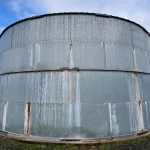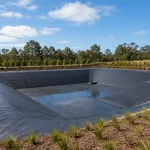
Flexible tanks provide a practical way to store liquids without installing a permanent rigid tank. Two common options are onion tanks and bladder tanks. Both use flexible materials and can be transported or stored when empty. However, their designs are quite different.
An onion tank is generally self-supporting when filled and provides open access from the top. A bladder tank is fully enclosed and uses fittings for filling and discharge. These differences affect how each tank is deployed, accessed, protected, and used.
Understanding the differences between onion tanks and bladder tanks can help when planning temporary water storage or other liquid containment applications.
This guide compares their design, setup requirements, common applications, materials, and important selection factors.
What is an Onion Tank?
An onion tank is a flexible, self-supporting liquid storage tank. It gets its name from the rounded shape it develops when filled. Unlike a conventional rigid tank, an onion tank does not require permanent walls or a fixed structure.
The flexible tank is placed on a suitable surface and expands as liquid is added. Many onion tanks have an open top or a large upper opening. This allows direct access to the stored water. This design makes onion tanks particularly useful where water needs to be stored quickly and accessed easily.
When empty, the tank can be folded or packed for transportation and storage. Learn more about onion tanks designed for temporary water storage across emergency, industrial, and remote applications.
How Does an Onion Tank Work?
An onion tank uses the weight and pressure of the stored liquid to develop its operating shape. The flexible walls rise as the tank fills. The tank’s shape and dimensions depend on its design, capacity, and fill level.
Water can usually be introduced through the upper opening or appropriate fittings. Discharge is typically managed through an outlet connection.
Because the tank is flexible, correct positioning and ground preparation are important before filling begins.
Common Uses for Onion Tanks
Onion tanks are often associated with temporary operations where rapid deployment is important.
Typical applications can include:
- Emergency water storage
- Temporary water supply
- Firefighting water support
- Construction sites
- Remote work sites
- Industrial projects
- Water transfer operations
- Temporary liquid containment
The exact application depends on the tank material and its compatibility with the stored liquid.
What is a Bladder Tank?
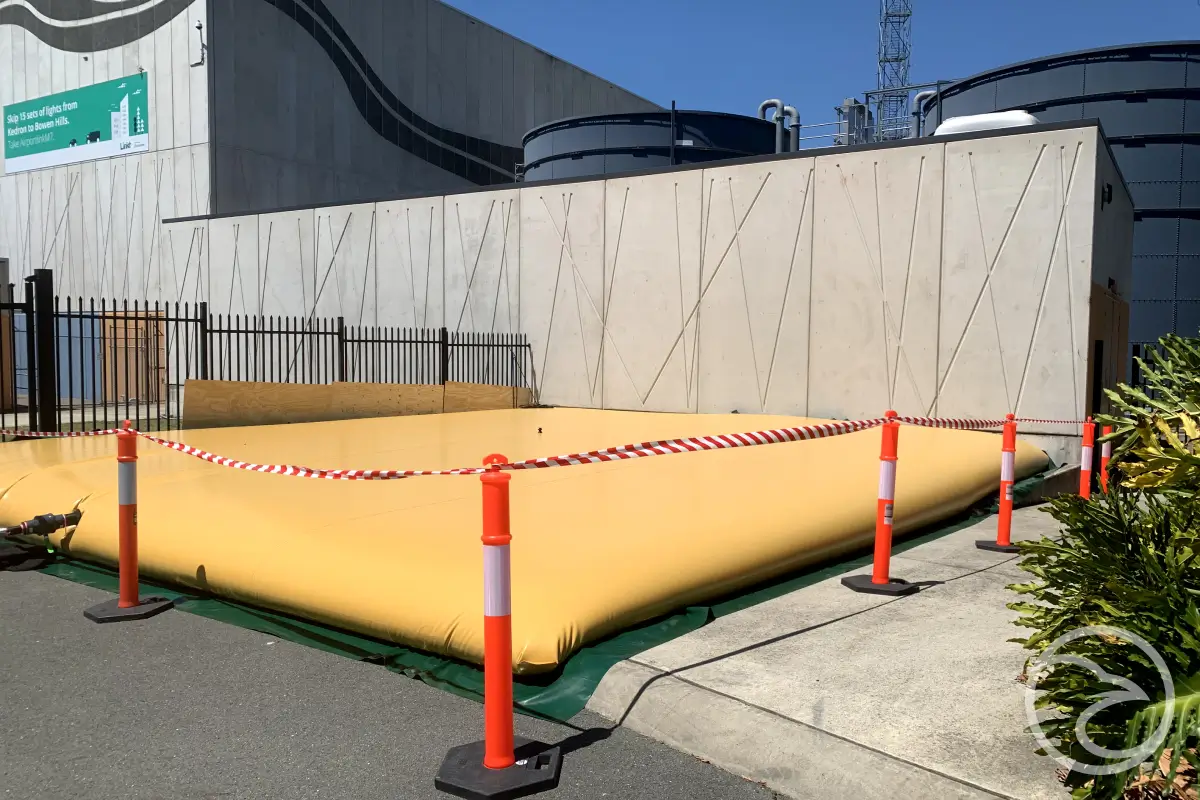
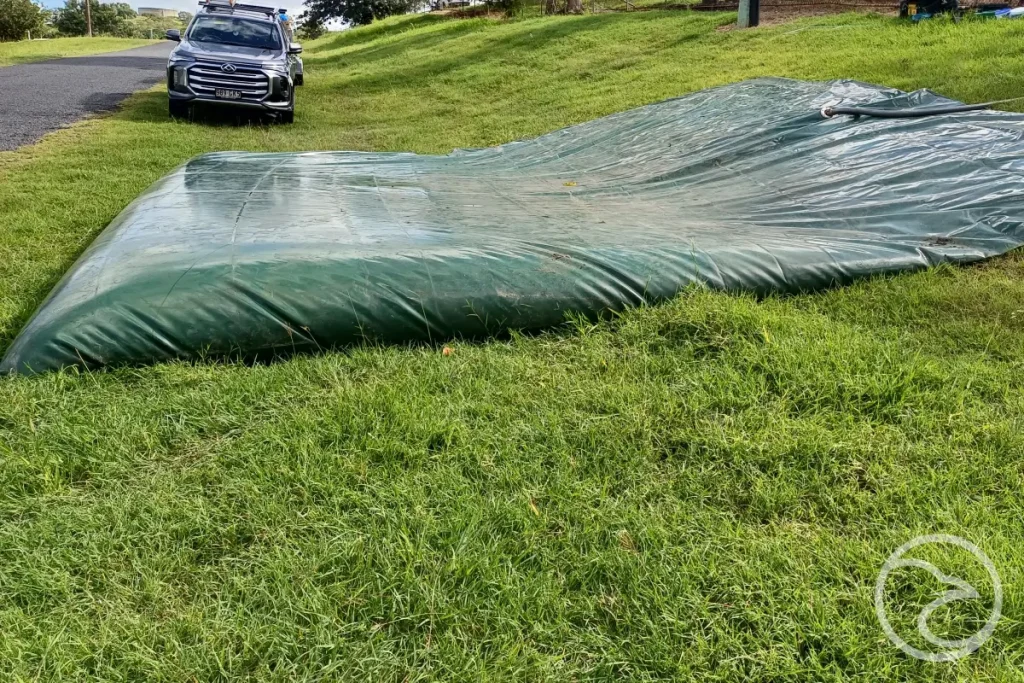
A bladder tank is a flexible, fully enclosed container used for liquid storage. It is sometimes described as a flexible pillow tank because of the shape it develops when filled. Unlike an onion tank, the stored liquid is not normally exposed through an open top.
Instead, liquid enters and leaves through designated fittings. The flexible membrane expands as the tank fills and collapses as the liquid is removed. When empty, the bladder can be folded into a relatively compact form.
This makes bladder tanks useful for temporary or transportable storage applications where permanent rigid tanks may not be practical.
Explore bladder tanks for temporary water storage, remote sites, and other flexible containment applications.
How Does a Bladder Tank Work?
An empty bladder tank is laid flat on a prepared surface. Liquid enters through an inlet fitting. As the volume increases, the flexible membrane expands vertically and horizontally according to its design.
The liquid remains enclosed within the membrane during normal storage. Discharge occurs through an outlet fitting or connected pumping system.
Because the bladder changes shape during filling, enough surrounding space must be available for its full operating footprint.
Common Uses for Bladder Tanks
Bladder tanks can be used across a range of temporary storage applications.
These can include:
- Temporary water storage
- Remote site water supply
- Construction projects
- Emergency water storage
- Agricultural operations
- Industrial sites
- Process water storage
- Temporary potable water storage with suitable materials
The stored liquid must always be compatible with the tank material.
Onion Tanks vs Bladder Tanks: Key Differences
Both systems provide flexible liquid storage, but their construction creates several important differences.
| Feature | Onion Tank | Bladder Tank |
|---|---|---|
| Basic design | Self-supporting flexible tank | Fully enclosed flexible tank |
| Upper section | Commonly open or provides large access | Enclosed |
| Liquid access | Direct access may be possible | Primarily through fittings |
| Filling | Opening or designated fittings | Inlet fittings |
| Discharge | Outlet connection | Outlet connection |
| Environmental exposure | Greater with open designs | Liquid remains enclosed |
| Empty storage | Foldable and compact | Foldable and compact |
| Deployment | Designed for temporary deployment | Designed for temporary or flexible storage |
| Ground requirements | Suitable prepared surface | Suitable prepared surface |
| Typical advantage | Accessible temporary storage | Enclosed flexible storage |
These differences do not make one tank universally preferable. The appropriate configuration depends on how and where the liquid will be stored.
Open vs Enclosed Liquid Storage
One of the biggest differences between onion tanks and bladder tanks is how the stored liquid is contained. An onion tank commonly provides open access from above. This can be useful when equipment needs direct access to the stored water.
It can also simplify some rapid filling and water-transfer operations. However, an open design creates greater exposure to the surrounding environment. Dust, debris, insects, and other contaminants may require consideration depending on the application.
A bladder tank provides enclosed storage. The liquid enters and leaves through designated fittings rather than an open upper section. This limits direct environmental exposure during normal storage.
However, an enclosed design does not automatically mean that a bladder tank is suitable for drinking water. The tank material and fittings must also be appropriate for the intended liquid.
Setup and Site Requirements
Flexible tanks do not require the same permanent construction as many rigid tanks. However, they still require appropriate site preparation.
The requirements vary with tank design, capacity, and operating conditions.
Ground Preparation
The installation surface is particularly important for flexible tanks. Sharp objects, stones, debris, and uneven areas can place unnecessary stress on the tank material.
The surface should be suitable for the specific tank system before deployment. Additional ground protection may be required depending on the site and manufacturer requirements.
Level Surface
A reasonably level surface helps the tank fill in its intended shape. Significant slopes can cause uneven liquid distribution and membrane loading.
This can affect both onion and bladder tanks. Site conditions should therefore be checked before filling starts.
Available Space
Flexible tanks expand as they fill. The empty dimensions do not represent the complete operating footprint.
Enough space must be available for the tank at its intended capacity. Clearance may also be needed for hoses, fittings, pumps, and operational access.
Filling and Emptying
Filling methods differ between the two designs. Onion tanks can offer direct upper access as well as designated connections.
Bladder tanks rely more heavily on their inlet and outlet fittings. The available pumps, hoses, flow rates, and connection requirements should be considered before deployment.
Storage Capacity and Available Space
Both onion and bladder tanks are available in different capacities. However, capacity should not be considered independently from the available site area. An onion tank spreads outward as it fills.
Its diameter and operating height change according to the tank design and liquid volume. A bladder tank also expands across the ground and increases in height.
Its filled shape is usually lower and broader than a conventional vertical rigid tank. This means flexible storage systems can require a substantial ground footprint.
When planning a temporary storage area, consider:
- Required liquid volume
- Filled tank dimensions
- Working space around the tank
- Hose and pump access
- Vehicle movement
- Ground conditions
- Drainage around the site
The largest possible capacity is not always the most practical configuration for a particular site.
Water Access and Discharge
The way users need to access stored water can strongly influence tank selection. Onion tanks provide a useful advantage where direct access to the water surface is required. This can suit certain emergency and operational applications.
Water can also be removed through designated outlet connections. Bladder tanks operate differently. Because the liquid remains enclosed, access is controlled through fittings.
Hoses, valves, or pumps can then form part of the filling and discharge arrangement. This configuration can be useful where controlled transfer is more important than direct access to the liquid surface.
The required flow rate and connection configuration should be considered for either system.
Protection from Environmental Contamination
Open and enclosed tanks have different levels of environmental exposure. An open onion tank can allow easier access to the stored liquid. That same access can also expose the liquid to surrounding conditions.
Wind can introduce dust or debris. Insects, vegetation, or other contaminants may also need consideration. An enclosed bladder tank provides greater separation between the liquid and the external environment. However, contamination control involves more than simply choosing an enclosed tank.
Hoses, fittings, filling equipment, handling practices, and the original water source can all affect water quality. This becomes particularly important when the stored water is intended for human consumption.
Can Onion Tanks and Bladder Tanks Store Potable Water?
Some flexible tanks can be manufactured for potable water storage. However, not every onion tank or bladder tank is suitable for drinking water. Suitability depends on the complete product specification.
The membrane material is particularly important because it remains in contact with the stored water. For potable applications, the material should meet the relevant requirements for drinking water contact. Fittings and other components that contact the water may also require consideration.
A general-purpose flexible tank should not automatically be treated as a potable water storage tank. Product documentation should be checked for the specific application.
Enclosed storage can help limit environmental exposure, but enclosure alone does not establish potable water suitability.
Flexible Tank Materials
Onion tanks and bladder tanks are commonly manufactured from flexible coated or polymer-based materials. The exact construction varies between products.
A flexible membrane must withstand the stresses created during filling, storage, emptying, folding, and transportation. Several material characteristics can influence suitability.
Mechanical Strength
The tank material experiences loads as the tank fills. The membrane and seams must suit the intended capacity and operating conditions.
Mechanical requirements can vary considerably between small and large flexible tanks.
Abrasion Resistance
Ground contact can create abrasion risks. This is one reason surface preparation is important.
Repeated deployment can also expose a flexible tank to different ground conditions.
UV Exposure
Temporary tanks are often installed outdoors. Sunlight and UV exposure can affect some flexible materials over time.
The intended outdoor exposure period should therefore be considered when selecting a tank.
Temperature
Both environmental temperature and liquid temperature can affect flexible materials. The product should be suitable for the expected operating range.
Chemical Compatibility
The membrane must be compatible with the stored liquid. A material suitable for water may not be appropriate for chemicals or other industrial liquids.
Compatibility should be confirmed for the specific product and application.
Durability and Service Conditions
Flexible tanks can be reused in suitable applications, but their service life depends on how they are used. Repeated folding, transport, deployment, and exposure can affect material condition.
Poor ground preparation can also increase the risk of damage.
Other factors can include:
- UV exposure
- Temperature
- Abrasion
- Stored liquid
- Filling practices
- Maximum operating capacity
- Cleaning methods
- Storage conditions when empty
The tank should be inspected according to its intended use and manufacturer guidance. Damage should be assessed before the tank is returned to service.
Onion Tanks for Emergency and Temporary Water Storage
Onion tanks are particularly associated with rapid temporary storage. Their self-supporting design allows them to be deployed without constructing a permanent tank structure. The open upper area can also provide convenient water access.
These characteristics can be useful during emergency operations. For example, temporary water storage may be required where permanent infrastructure is unavailable or insufficient. Firefighting support is another potential application.
An onion tank can act as a temporary water holding point where suitable equipment can access the stored water. Construction and remote projects can also use onion tanks where storage is needed for a limited period.
The suitability of the membrane should still match the intended water or liquid.
Bladder Tanks for Temporary and Remote Storage
Bladder tanks are useful where enclosed flexible storage is required. They can be transported to a site, deployed on a prepared surface, filled, and later packed away. This can suit remote locations where permanent tanks would be difficult or unnecessary.
Construction sites may use flexible bladder tanks for temporary water requirements. Agricultural and industrial operations can also use them where appropriate.
The enclosed design can be particularly useful where direct access to the liquid surface is unnecessary. Instead, filling and discharge can be managed through connected hoses and fittings.
Can Flexible Tanks Store Chemicals or Other Liquids?
Flexible tanks are not limited to water, but material compatibility becomes especially important with other liquids. Chemicals can interact differently with polymers, coatings, seams, and fittings.
A tank designed for water should not automatically be used for chemical storage.
Important factors can include:
- Chemical type
- Concentration
- Temperature
- Storage duration
- Membrane material
- Seam construction
- Fitting materials
Compatibility should be established for the specific stored liquid. This applies to both onion tanks and bladder tanks. The tank’s physical design does not determine chemical compatibility on its own.
Transport and Storage When Empty
Portability is one of the main characteristics shared by onion tanks and bladder tanks. Both systems can collapse when empty. This reduces the storage space required compared with many rigid tanks.
The tanks can also be transported between temporary sites. However, flexible materials still require careful handling. Dragging a folded tank across rough ground can cause abrasion or damage.
The tank should also be clean and appropriately prepared before long-term storage. Folding and storage methods should follow the requirements of the specific product.
Proper handling is especially important when tanks are repeatedly deployed.
Maintenance and Inspection
Flexible tanks should be checked before and after use. Inspection can identify damage that occurred during transportation, deployment, or operation.
Areas requiring attention can include:
Tank Membrane
Check accessible surfaces for cuts, punctures, abrasion, or unusual deterioration.
Seams
Seams should be examined for visible damage or separation.
Fittings
Inlets, outlets, valves, and connections can experience mechanical stress during use. Their condition should be checked before filling.
Ground Contact Areas
The lower tank surface can be exposed to abrasion or puncture hazards. Problems with the installation surface may also become visible after the tank is removed.
Previous Repairs
Previously repaired areas may require additional attention during inspection. Repeated damage in one location can indicate an unresolved handling or site problem.
Onion Tank vs Bladder Tank: which Factors Should You Consider?
The main differences become clearer when the intended application is considered.
Type of Liquid
Start with the liquid being stored. Water, potable water, process liquids, and chemicals can require different membrane specifications.
Required Storage Duration
Consider whether storage is needed for hours, days, weeks, or a longer period. The expected duration can affect material and operational requirements.
Need for Open Water Access
Direct access to the water surface can be important for some operations. An onion tank can provide this type of access.
A bladder tank keeps the liquid enclosed and relies on fittings.
Environmental Exposure
Consider dust, debris, wildlife, weather, and other site conditions. Open and enclosed designs interact differently with the surrounding environment.
Available Space
Check the tank’s filled dimensions rather than only its packaged size. Both tank types expand significantly during filling.
Ground Conditions
A suitable installation surface is important for either design. The area should be prepared before the flexible tank is deployed.
Filling and Discharge Requirements
Consider how liquid will enter and leave the tank. Pump capacity, hoses, valves, and required flow rates can affect the setup.
Transport Requirements
Both designs can provide advantages where tanks need to move between sites. Pack size, handling requirements, tank weight, and deployment procedures should still be considered.
When is an Onion Tank Commonly Used?
An onion tank is commonly considered where temporary storage and direct water access are important. Its design can support rapid deployment without a permanent rigid structure. Typical scenarios can include emergency water supply, firefighting support, temporary site storage, and water transfer operations.
The open design is an important functional difference. It can make access easier but also increases exposure to environmental contamination.
The intended use should therefore determine whether that characteristic is appropriate.
When is a Bladder Tank Commonly Used?
A bladder tank is commonly used where temporary liquid storage needs to remain enclosed. The system can be useful on construction sites, remote projects, agricultural operations, and temporary water storage locations.
Liquid is transferred through fittings rather than direct access from above. This provides a different operating arrangement from an onion tank.
The required membrane, fittings, capacity, and site conditions still depend on the individual application.
Understanding the Difference Between Onion Tanks and Bladder Tanks
Onion tanks and bladder tanks both provide flexible alternatives to permanent rigid storage systems. Their basic construction, however, creates different operating characteristics. Onion tanks generally provide self-supporting temporary storage with direct upper access.
This can be useful for emergency water, firefighting support, and temporary water transfer applications. Bladder tanks provide enclosed flexible storage. Liquid is managed through fittings, making them suitable for applications where an enclosed storage system is required.
Neither design is automatically suitable for every liquid or site. Tank material, capacity, ground conditions, storage duration, environmental exposure, and access requirements should all be considered. For potable water or chemical storage, material compatibility becomes particularly important.
Understanding these differences makes it easier to identify which flexible tank configuration matches the requirements of a particular storage application.