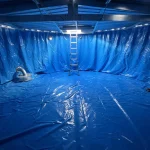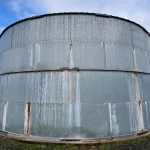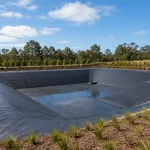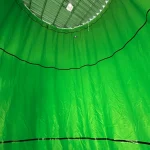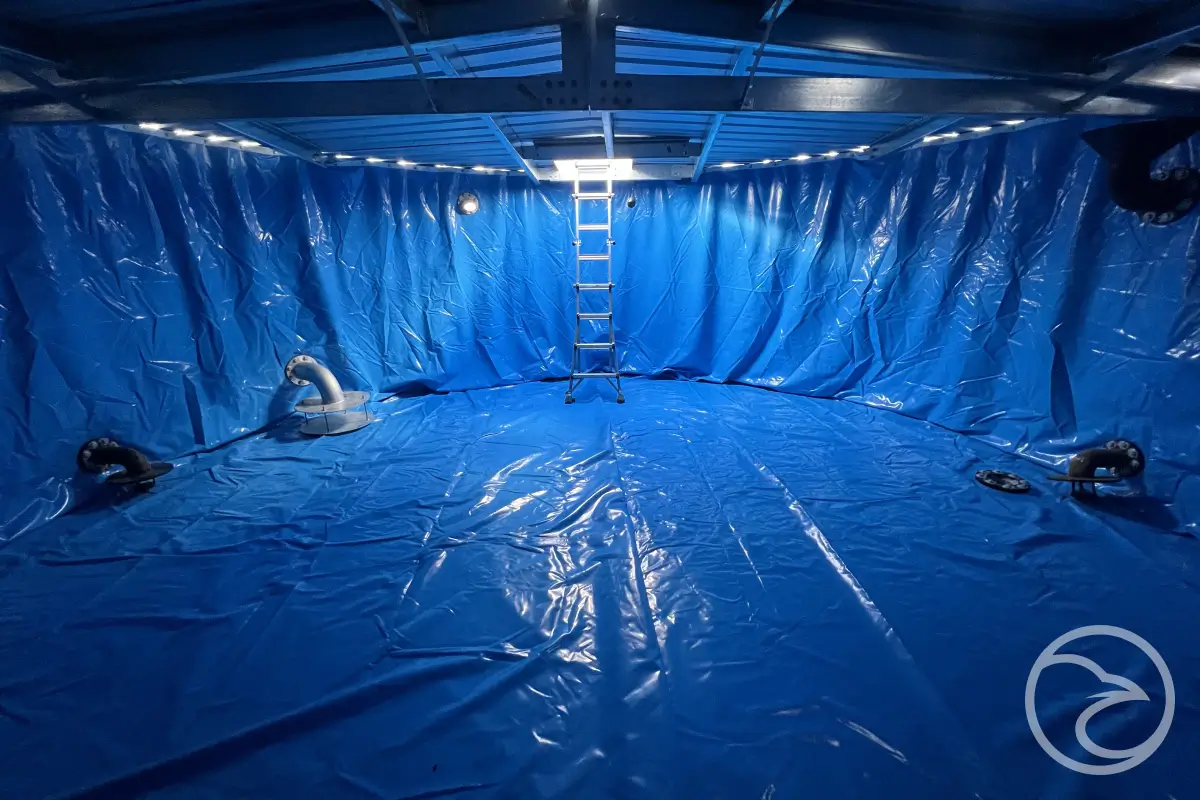
Water stored for drinking requires careful management. The tank itself is only one part of the storage system. Internal surfaces also come into direct contact with the water.
A suitable potable water tank liner can provide a dedicated barrier between stored water and the tank structure. However, not every water tank liner is suitable for drinking water. Material selection, tank condition, water quality requirements, and operating conditions all need consideration.
In Australia, materials used in contact with drinking water may also need to meet relevant standards and regulatory requirements. This guide explains potable water tank liners, common materials, applications, replacement considerations, and important selection factors.
What is a Potable Water Tank Liner?
A potable water tank liner is an internal membrane designed for tanks storing water intended for human consumption. Potable water means water suitable for drinking or culinary purposes based on health and aesthetic considerations.
The liner creates a barrier between the water and the internal tank surface. Depending on the tank system, this can help prevent direct contact with steel, concrete, or another substrate. Tank liners for potable water can be used in both new and existing storage tanks.
They may also form part of a refurbishment project when an existing liner requires replacement. The liner must be suitable for its intended drinking water application.
A material being waterproof does not automatically make it appropriate for potable water storage.
Why do Potable Water Tanks Use Liners?
Different water tanks use different containment systems. Some rely on their original internal surface or coating. Others use flexible liners to provide the primary containment barrier.
A liner can serve several functions within a potable water tank.
Creating a Containment Barrier
The primary purpose of a liner is to contain the stored water. A properly selected liner forms a continuous internal barrier within the tank.
This can be particularly useful in sectional and panel tank systems.
Separating Water from the Tank Structure
The liner can reduce direct contact between stored water and the underlying tank surface. This allows the containment function and structural function to be treated separately.
However, the liner does not replace the need for a sound tank structure. Structural defects should be assessed before liner installation.
Supporting Tank Refurbishment
An existing tank does not always need complete replacement when its internal containment system deteriorates. Where the structure remains suitable, relining may form part of the refurbishment process.
The tank condition should still be assessed before a replacement liner is installed.
Adapting Existing Tanks
Some tanks may require a new internal containment system following changes, repairs, or refurbishment. A suitable liner can sometimes provide that barrier.
For potable water, the selected liner must also meet the requirements associated with drinking water contact.
What Makes a Tank Liner Suitable for Potable Water?
The words “waterproof” and “potable water suitable” do not mean the same thing. A material can contain water without necessarily being suitable for drinking water applications.
Several factors therefore need consideration.
Material Suitability
The liner material should be designed and tested for the intended application. This is particularly important because the material remains in prolonged contact with stored water.
The complete liner specification should be reviewed rather than relying only on its base polymer. For example, two PVC liner products can have different formulations and approvals.
One product’s suitability does not establish the suitability of every PVC membrane.
Effect on Water Quality
Materials in contact with drinking water should not adversely affect its quality under their intended conditions of use. Potential effects can involve taste, odour, appearance, or substances released from the material.
Australia uses specific testing requirements for products intended to contact drinking water. This makes certification an important consideration when selecting a potable water tank liner.
Chemical Compatibility
Potable water is not always chemically identical between storage systems. Water chemistry and treatment processes can vary.
Disinfectants and other treatment conditions can affect liner materials over time. The liner should therefore be compatible with the water and expected treatment conditions.
Operating Temperature
Temperature can influence flexible membrane behaviour. Different liner materials have different operating ranges.
Both normal and expected maximum temperatures should be considered when selecting the material.
Intended Service Conditions
Tank size, geometry, exposure, water movement, and maintenance practices can influence liner performance. A liner suitable for one water tank may not automatically suit another.
Material selection should consider the complete operating environment.
Potable Water Tank Liners and Australian Requirements
Australian drinking water storage requires particular attention to materials that contact the water. AS/NZS 4020 addresses testing of products used in contact with drinking water. Western Australia’s Department of Health, for example, states that products compliant with AS/NZS 4020:2018 may be used in contact with drinking water. Products must also be used according to manufacturer recommendations.
Government guidance also specifically includes tank liners among water-system components that should meet relevant requirements for drinking water contact. AS/NZS 4020 should not be confused with a general statement that every product made from a particular polymer is approved.
Compliance relates to the tested product and its intended conditions of use. Product documentation should therefore be checked when selecting a potable water liner.
The Australian Drinking Water Guidelines provide the broader national framework for safe drinking water management. The current national water-quality website identifies the guidelines as updated in June 2025.
Specific requirements can also vary by jurisdiction and application.
Common Materials Used for Potable Water Tank Liners
Flexible liners can be manufactured from several polymer materials. The correct material depends on the tank, water conditions, and required approvals.
PVC Tank Liners
PVC is widely used for flexible containment applications. Its flexibility can help the membrane conform to different tank dimensions and shapes. PVC liners can also be manufactured around fittings, corners, and other tank features.
However, PVC alone does not mean potable-water suitability. The specific liner product should be suitable for drinking water contact.
Its formulation, certification, thickness, and intended operating conditions all matter.
Polyethylene Tank Liners
Polyethylene materials are also used in water containment systems. Different polyethylene formulations can provide different mechanical and chemical properties.
Flexible polyethylene liners can be manufactured for larger tanks and specialised storage applications. Again, the base material alone is not enough to establish drinking-water suitability.
The actual liner product and its relevant certification should be checked.
Reinforced Flexible Liners
Some applications use reinforced membrane materials. Reinforcement can improve particular mechanical properties while retaining the flexibility needed for installation.
These systems may be useful for large or complex tank configurations. The reinforcement, membrane composition, seams, and fittings all form part of the complete liner system.
For potable water applications, the relevant product should be suitable for drinking water contact. Tank dimensions, liner material, preparation, and installation can influence the overall project cost. See our tank liner cost guide for more details.
Potable Water Tank Liners for Different Tank Types
Potable water is stored in many different tank structures. The tank material can influence liner design and installation requirements.
Steel Water Tanks
Steel tanks can use internal liners to separate stored water from the structural shell. Before installation, the steel surfaces should be assessed.
Corrosion, damaged components, sharp projections, or irregular surfaces can affect the new liner. Installing a liner should not be treated as a substitute for necessary structural repairs.
Concrete Water Tanks
Concrete tanks present different surface conditions. Cracks, rough surfaces, penetrations, and changes in geometry may need consideration before lining.
The preparation requirements depend on the liner system and existing tank condition.
Panel Tanks
Panel tanks consist of multiple sections joined to create the tank structure. Their internal geometry can include corners, joints, fasteners, and penetrations.
Flexible liners can be manufactured to suit these configurations. Accurate tank measurements are important because the liner must correspond with the internal dimensions.
Rural Water Storage Tanks
Potable water tank liners can also be used in suitable rural storage systems. The application may involve rainwater or another drinking water source.
However, liner suitability is only one part of maintaining drinking water quality. Tank covers, inlets, overflows, sediment, contamination risks, and maintenance also matter.
Commercial Water Storage Tanks
Commercial properties may use larger water storage systems for different operational purposes. Where water is intended for human consumption, the internal materials require appropriate consideration.
The tank’s use, capacity, construction, and water management system can influence liner selection. Learn more about commercial tank liners designed for a range of water storage and commercial containment applications.
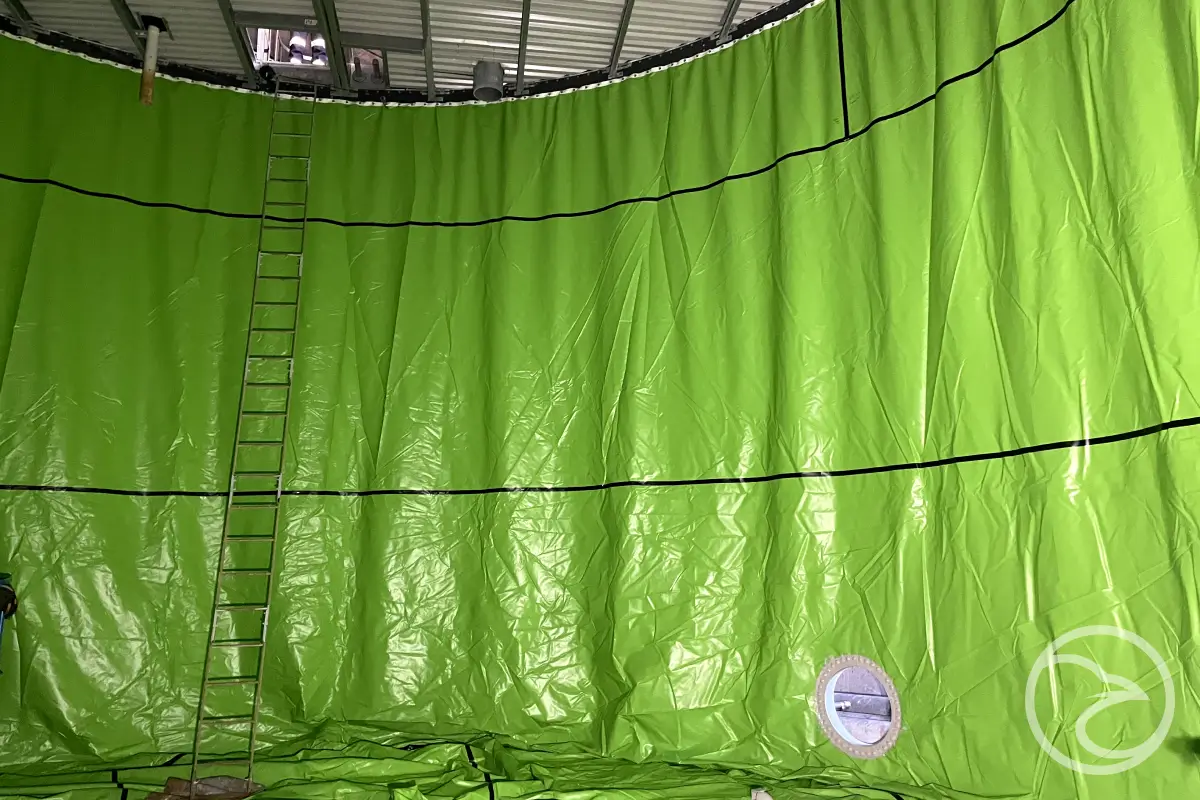
New Liners vs Replacement Potable Water Tank Liners
A potable water liner can be installed as part of a new tank system or as a replacement. The two situations require different considerations. A new installation begins with a tank that has not experienced years of operational deterioration.
The installer can assess the original structure and prepare surfaces for the specified liner system. A replacement project starts with an existing tank. That tank may contain corrosion, previous repairs, damaged surfaces, or ageing components.
Removing an old liner can also reveal conditions that were previously hidden. For this reason, replacement potable water tank liners should not be approached as simple like-for-like membrane changes.
The underlying tank condition should be considered as part of the project.
When does a Potable Water Tank Liner need Replacement?
Liner condition changes over time. The rate of deterioration depends on material, installation, operating conditions, maintenance, and environmental factors.
Several observations can indicate that further assessment is required.
Visible Tears or Punctures
Mechanical damage can compromise the containment barrier. The significance depends on the location and extent of the damage.
A small defect may sometimes be repairable. Multiple defects can indicate a wider liner condition problem.
Water Leakage
Unexpected water loss can indicate liner damage, although other components can also cause leaks. Fittings, connections, penetrations, and structural defects should also be considered.
The source should be identified before deciding on repair or replacement.
Loss of Flexibility
Flexible liner materials can change as they age. A liner that has become brittle or unusually rigid may require further assessment.
Material condition should be considered across the liner rather than at one isolated location.
Seam Problems
Manufactured liners may contain seams or fabricated joints. These areas form part of the containment system.
Any visible deterioration, separation, or leakage around seams should be investigated.
Damage Around Fittings
Tank fittings and penetrations create transition points within the liner system. Movement or mechanical stress around these areas can contribute to damage.
These locations should be included during liner inspections.
Widespread Ageing
One local defect does not necessarily mean the entire liner needs replacement. However, widespread deterioration presents a different situation.
Repeated repairs across an ageing liner may indicate that broader replacement should be assessed.
What Should be Checked Before Installing a Potable Water Tank Liner?
The liner should not be considered separately from the tank receiving it. Several tank conditions should be reviewed before installation.
Tank Structure
The supporting structure should be assessed for significant deterioration or damage. A flexible liner provides containment. It is not intended to restore structural integrity.
Structural problems should therefore be addressed separately.
Internal Surfaces
The liner sits against or close to internal tank surfaces. Sharp edges, damaged surfaces, debris, and projections can create potential damage points.
Appropriate surface preparation depends on the liner and tank system.
Corrosion
Corrosion should be investigated before it disappears behind a new liner. Its extent can affect the required repair scope.
Covering corrosion with a liner does not resolve structural deterioration.
Tank Dimensions
Flexible liners are commonly fabricated to suit particular dimensions. Length, width, diameter, depth, and tank geometry can therefore influence manufacturing.
Accurate measurements also help reduce unnecessary stress or excessive material during installation.
Fittings and Penetrations
Inlets, outlets, overflows, drains, and other penetrations require consideration. The liner system needs suitable interfaces at these locations.
Their condition should also be checked before the new membrane is installed.
Existing Liner or Coating
Where a tank already has an internal containment system, its condition can provide useful information. Damage patterns may help identify underlying problems.
Simply removing the old liner without investigating repeated defects can allow the same problem to affect the replacement.
Does a Potable Water Tank need Replacement if the Liner Fails?
Not necessarily. The liner and tank structure perform different functions. A failed liner can lose its ability to contain water while the supporting tank remains serviceable.
In these circumstances, repairing or replacing the liner may be possible after the tank is assessed. The opposite can also occur. A liner may appear relatively sound while the supporting tank has developed significant structural deterioration.
Installing a new liner does not correct that problem. The decision should therefore consider both containment and structural condition. This distinction is important when comparing tank relining with complete tank replacement.
Can a Potable Water Tank Liner be Repaired?
Some liner defects may be repairable. Whether repair is appropriate depends on the material, damage, location, age, and overall liner condition. A local puncture in an otherwise serviceable liner presents a different situation from widespread brittle material.
Repairing one visible defect may provide limited value when deterioration exists throughout the membrane. The cause of the damage should also be investigated. For example, repeated punctures at the same location may indicate a sharp or damaged surface beneath the liner.
Repairing the membrane without addressing that surface could allow the problem to return.
Potable Water Tank Liner Maintenance
Routine observation can help identify changes before they become more extensive. Maintenance requirements depend on the tank system and application. Relevant activities can include checking accessible liner surfaces, fittings, penetrations, and visible connections.
Unexpected water loss should also be investigated rather than assumed to be normal. Tank cleanliness matters as well. For example, Western Australian public-health guidance recommends inspecting domestic water tanks every two to three years for sediment accumulation.
The appropriate inspection and maintenance schedule can vary for commercial, industrial, and managed drinking-water systems. Internal tank entry can also involve confined-space hazards and requires appropriate procedures.
Potable Water Tank Liners vs General Water Tank Liners
A useful distinction exists between a general water tank liner and a potable water tank liner. Both can be designed to contain water. However, potable water storage introduces additional material requirements because the water is intended for human consumption.
A general-purpose liner may be suitable for:
- Process water
- Irrigation water
- Non-potable storage
- Industrial water
- Other containment applications
That does not automatically make the same product suitable for drinking water. A potable water liner should have appropriate evidence supporting its intended drinking-water application.
This distinction is especially important when selecting replacement liners. Choosing a liner based only on dimensions, thickness, or price can overlook its intended use.
How to Choose a Potable Water Tank Liner
Selecting a liner involves more than finding a membrane that fits inside the tank. The complete application should be considered.
Identify the Intended Water Use
First establish whether the tank stores potable or non-potable water. This determines whether drinking-water suitability needs to form part of material selection.
Check Potable Water Suitability
Review the specific product documentation and applicable certification. Do not assume suitability because another liner made from the same polymer has been approved.
For Australian applications, relevant AS/NZS 4020 compliance should be considered where applicable.
Consider the Existing Tank Material
Steel, concrete, and other substrates create different installation conditions. Surface preparation and liner protection requirements can therefore differ.
Check Water and Chemical Compatibility
Consider normal water chemistry and any treatment chemicals expected during service. The liner should suit its intended exposure conditions.
Consider Tank Size and Geometry
Large tanks, panel tanks, and unusual shapes may require custom liner fabrication. Corners, dimensions, fittings, and penetrations all influence liner design.
Assess the Existing Tank Condition
For replacement projects, inspect the structure before installing the new liner. Identify corrosion, damage, previous repairs, and unsuitable surfaces.
This can prevent existing problems from being hidden beneath the replacement membrane.
Consider Expected Operating Conditions
Temperature, water level changes, maintenance access, and other operational factors can influence liner selection. These conditions should be considered alongside material approval.
For tanks requiring a new internal liner, explore tank liner installation services for different tank types and configurations.
Understanding Potable Water Tank Liner Requirements
Potable water tank liners provide an internal containment barrier for tanks storing drinking water. However, selecting a liner requires more than choosing a waterproof membrane. The material must suit the intended water application and expected operating conditions.
Tank structure, internal surfaces, fittings, dimensions, water chemistry, and existing deterioration can all affect the project. Drinking-water suitability also requires particular attention. In Australia, AS/NZS 4020 provides an important testing framework for products used in contact with drinking water.
For existing tanks, the condition of the structure should be assessed before relining. A new liner can restore an appropriate containment barrier, but it cannot correct unresolved structural deterioration.
Considering the tank and liner as separate but connected systems helps determine whether repair, relining, or broader refurbishment is required.